

10 Vegetable Garden Design Ideas for High Yields
Creating a productive vegetable garden design is more than just planting seeds—it’s about optimizing space, soil, and resources to maximize your harvest. Whether you’re a beginner gardener or an experienced green thumb, the right vegetable garden design can transform your backyard, balcony, or even a small urban plot into a bountiful source of fresh produce. In this article, we’ll explore 10 innovative vegetable garden design ideas that focus on high yields, incorporating principles like efficient spacing, soil health, and sustainable practices. These designs not only boost productivity but also make gardening more enjoyable and eco-friendly. From raised beds to vertical setups, each idea is tailored to help you get the most out of your growing season while integrating the keyword vegetable garden design seamlessly into your planning process.
By choosing a vegetable garden design that suits your climate, space, and lifestyle, you can achieve impressive yields with less effort. Factors like sunlight exposure (at least 6-8 hours daily), water access, and pest management play crucial roles.
1. Raised Bed Gardens
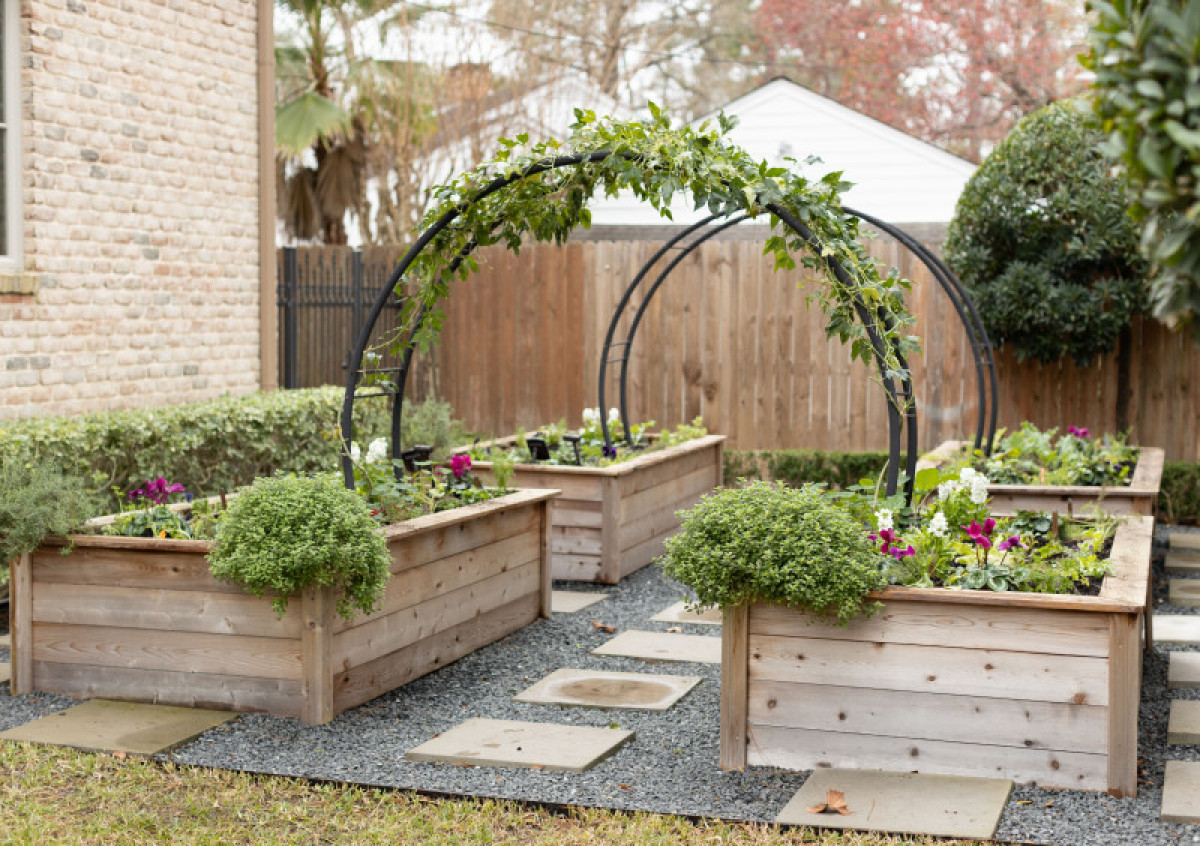
Raised bed gardens are a cornerstone of effective vegetable garden design, elevating your plants above ground level for better drainage and soil control. This method involves building wooden, stone, or metal frames filled with nutrient-rich soil, typically 6-12 inches deep. It’s ideal for areas with poor native soil, as you can customize the mix with compost, peat moss, and vermiculite for optimal fertility.
One key advantage is improved root development, leading to higher yields—up to four times more than traditional rows. Space beds 3-4 feet wide for easy access without stepping on the soil, preventing compaction. Incorporate crop rotation in your vegetable garden design to avoid nutrient depletion; for example, follow heavy feeders like tomatoes with legumes that fix nitrogen.
To implement, site your beds in full sun and add trellises for vining crops like cucumbers. Mulch with straw to retain moisture and suppress weeds. Gardeners in urban settings love this design for its neat appearance and accessibility. With proper planning, raised beds can yield abundant harvests of carrots, lettuce, and beans throughout the season.
2. Companion Planting
Companion planting enhances any vegetable garden design by pairing plants that benefit each other, mimicking natural ecosystems for higher yields. This technique involves growing compatible species together to deter pests, improve pollination, and maximize space. For instance, plant marigolds with tomatoes to repel nematodes, or basil near peppers to enhance flavor and ward off aphids.
In semantic terms, this vegetable garden design promotes biodiversity, reducing the need for chemical interventions. The “Three Sisters” method—corn, beans, and squash—is a classic example: corn provides support, beans add nitrogen, and squash shades the soil to retain moisture. Aim for diversity; tall plants like sunflowers can shade heat-sensitive greens like spinach.
To get started, map your garden layout considering plant heights and needs. Avoid incompatible pairs, such as onions with beans, which can stunt growth. This design not only boosts yields by 20-30% through natural pest control but also enriches soil health over time. It’s a sustainable choice for organic gardeners seeking flavorful, healthy produce.
3. Vertical Gardening
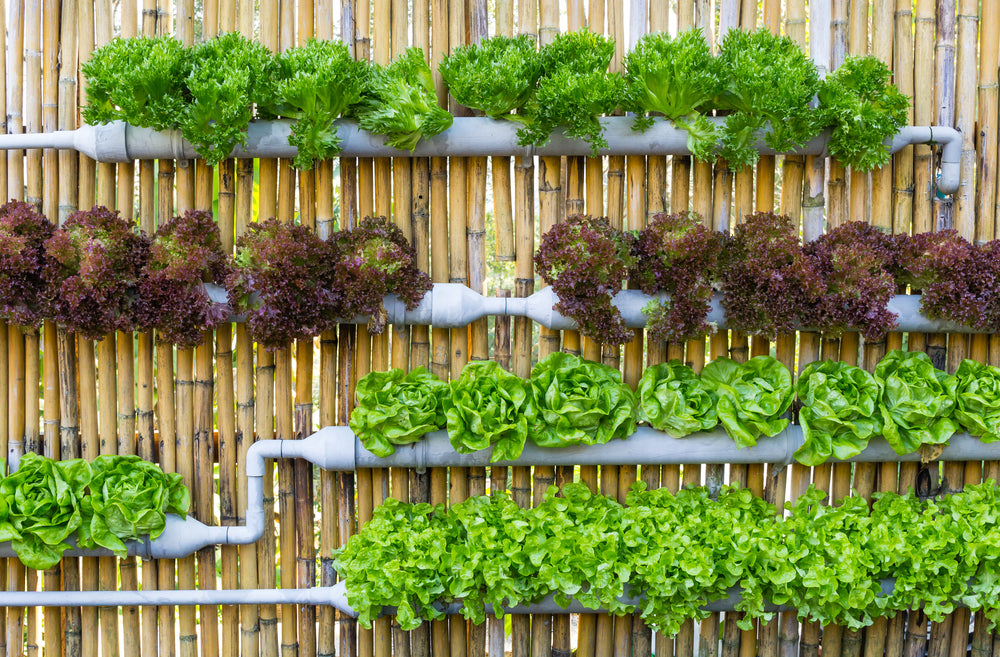
Vertical gardening revolutionizes vegetable garden design for small spaces, using walls, fences, or trellises to grow upwards and increase yields per square foot. This approach is perfect for vining vegetables like peas, beans, and tomatoes, which can climb structures, freeing ground space for root crops.
Incorporate elements like hanging pockets, pallet planters, or PVC pipe systems in your vegetable garden design to layer plants efficiently. Benefits include better air circulation, reducing disease risk, and easier harvesting. Position in sunny spots, ensuring supports can handle weight—use sturdy materials like bamboo or metal grids.
For high yields, train plants early and prune excess foliage. Combine with drip irrigation for consistent moisture. Semantic SEO highlights terms like space-saving and urban gardening, making this ideal for balconies. Expect doubled harvests from crops like cucumbers and strawberries in compact areas, turning limited space into a productive haven.
4. Square Foot Gardening
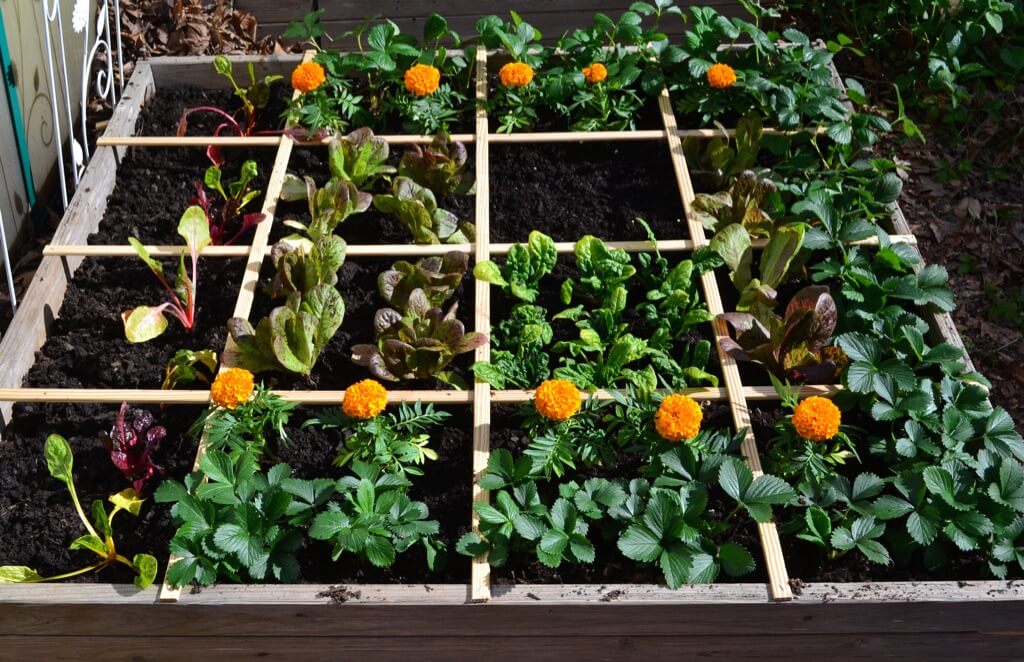
Square foot gardening is a precise vegetable garden design that divides beds into 1×1 foot grids, allowing intensive planting without waste. Popularized by Mel Bartholomew, it minimizes weeding and maximizes efficiency, suitable for beginners.
Fill raised beds with a soilless mix and plant according to spacing: one tomato per square, four lettuces, or 16 carrots. This vegetable garden design emphasizes succession and companion principles for continuous high yields. Rotate crops seasonally to maintain soil vitality.
Advantages include reduced water use and higher productivity—up to 100% more than row planting. Add vertical elements for vining plants. In semantic contexts, it aligns with efficient resource use, appealing to eco-conscious gardeners. With careful planning, harvest diverse veggies like radishes and herbs from a 4×4 foot bed all season long.
5. Container Gardening
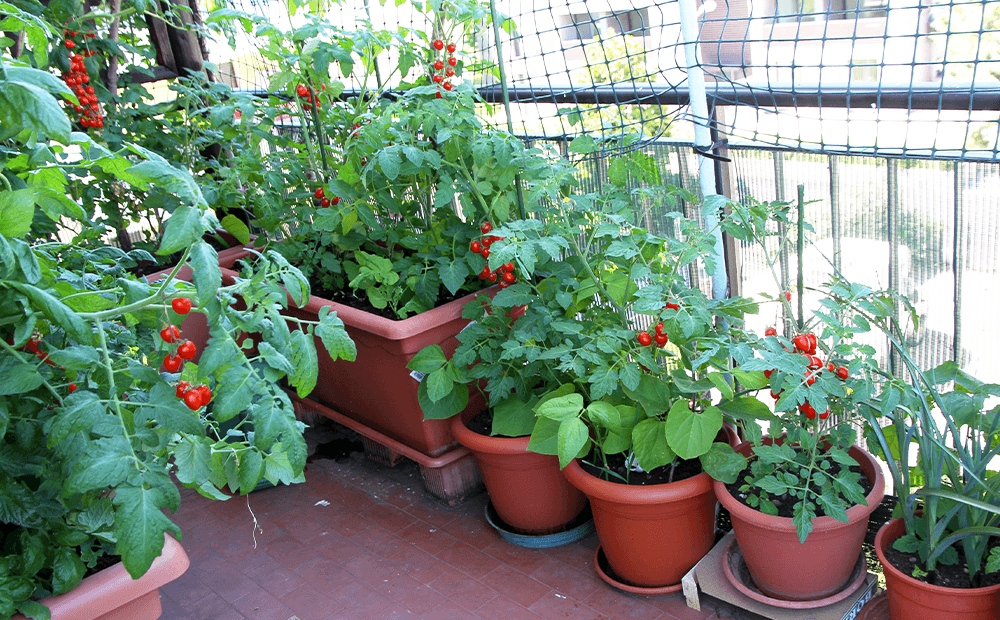
Container gardening offers flexibility in vegetable garden design, perfect for patios or renters without land. Use pots, buckets, or grow bags filled with potting soil for portable plots that yield surprisingly well.
Choose containers with drainage holes, sizing appropriately—large for tomatoes, smaller for herbs. This design allows easy relocation for optimal sun and protection from weather. Incorporate self-watering systems for consistent moisture, boosting yields.
Semantic elements include mobility and small-space solutions. Mix edibles like peppers with flowers for aesthetics. With proper fertilization, expect high outputs from compact setups, making it ideal for urban dwellers seeking fresh produce.
6. Succession Planting
Succession planting extends your vegetable garden design’s productivity by staggering sowings for continuous harvests. Plant quick-maturing crops like radishes every 2-3 weeks, replacing harvested ones.
This method optimizes space and time, preventing gluts or shortages. In your vegetable garden design, plan based on maturity dates—follow lettuce with beans. It enhances soil use and reduces pest buildup through rotation.
For high yields, use calendars and zone-specific guides. Semantic SEO ties in with season extension and sustainability. Gardeners can enjoy fresh veggies from spring to fall, maximizing output with minimal extra effort.

7. Intercropping
Intercropping mixes crops in the same space within your vegetable garden design, like planting fast-growing lettuce between slow-maturing broccoli. This boosts yields by utilizing different growth habits and timelines.
Benefits include natural shading, pest confusion, and efficient nutrient use. Avoid competition by selecting compatible pairs. This design promotes biodiversity, aligning with semantic terms like polyculture.
Implement by planning layouts carefully; yields can increase by 50% in diverse setups. It’s a smart choice for intensive gardening.

8. Keyhole Gardens
Keyhole gardens are circular, raised beds with a central compost bin in vegetable garden design, originated in arid regions for water efficiency. The shape allows easy access, with composting nourishing plants radially.
Build with stones or bricks, filling with layered organics. This self-fertilizing system yields high in poor soils. Semantic focus on drought-resistant gardening.
Water through the center for even distribution; harvest greens and roots abundantly. Ideal for sustainable, high-yield plots.
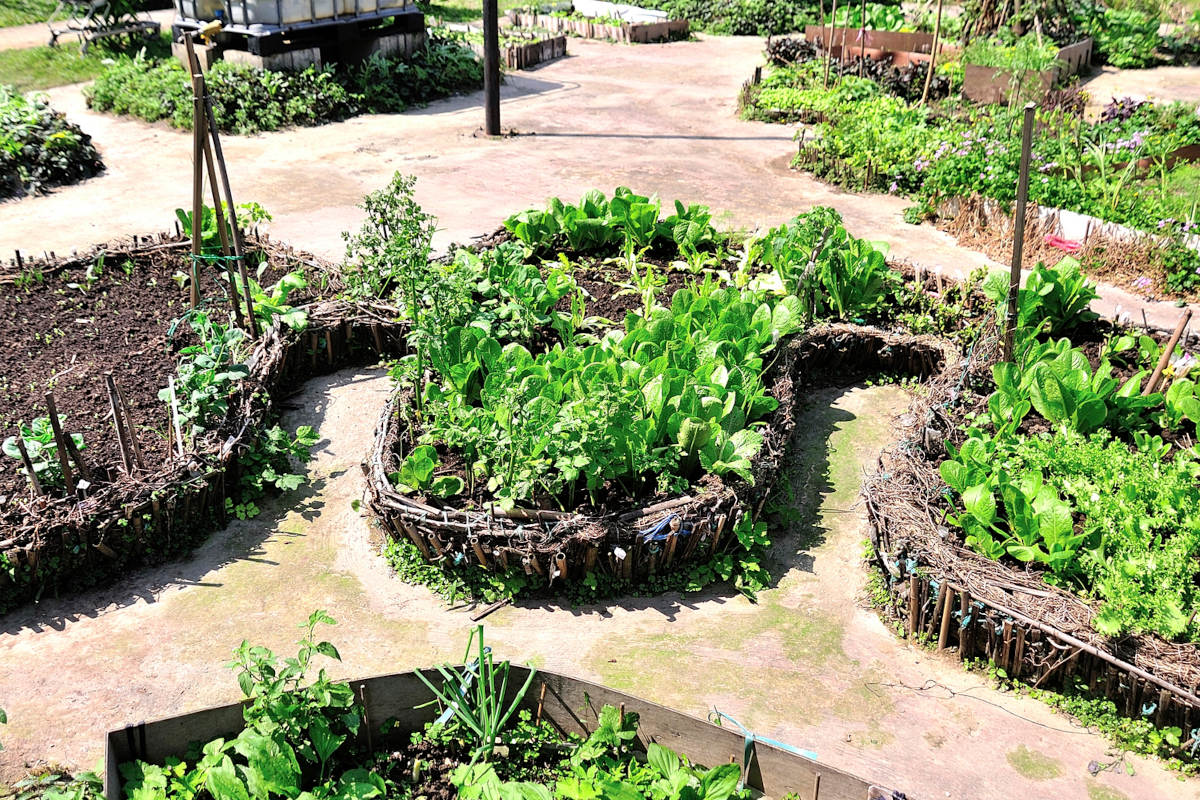 9. Hugelkultur
Hugelkultur involves mounded beds of woody debris in vegetable garden design, decomposing to create fertile, water-retaining soil. Layer logs, branches, and compost for long-term nutrition.
This no-watering-needed design (after establishment) yields high with minimal maintenance. Semantic ties to permaculture.
Plant on slopes for variety; expect bumper crops as materials break down. Great for sloped or wooded areas.

10. No-Dig Gardening
No-dig gardening preserves soil structure in vegetable garden design by layering mulch and compost over existing ground. Avoid tilling to protect microbes and worms.
This low-effort method builds fertility over time for high yields. Semantic emphasis on regenerative practices.
Spread cardboard, then organics; plant directly. Yields improve annually with less weeding. Perfect for healthy, productive gardens.
(Assuming [image:9] for no-dig based on pattern)
FAQs
What is the best vegetable garden design for beginners?
Raised beds or square foot gardening are excellent starters, offering control and simplicity.
How does companion planting fit into vegetable garden design?
It enhances yields by pairing beneficial plants, reducing pests naturally.
Can vertical gardening work in shady areas?
It can, but choose shade-tolerant veggies like lettuce; supplement with grow lights if needed.
What’s the ideal soil mix for container vegetable garden design?
Use equal parts potting soil, compost, and perlite for drainage and nutrients.
How often should I rotate crops in my vegetable garden design?
Annually, to prevent disease and maintain soil health.
Is succession planting suitable for all climates?
Yes, adjust timings based on your growing season for continuous yields.
What materials are best for building a keyhole garden?
Use local stones, bricks, or recycled materials for sustainability.
Does hugelkultur require watering?
Initially yes, but it becomes self-sustaining as wood retains moisture.
How does no-dig gardening improve yields?
By preserving soil life, it fosters better root growth and nutrient uptake.
Can intercropping be used in small vegetable garden designs?
Absolutely, it maximizes space efficiently for higher outputs.
Final Words
Incorporating these vegetable garden design ideas can lead to remarkable high yields while fostering a sustainable approach to gardening. Experiment with one or combine several to suit your needs—remember, the key is observation and adaptation. With thoughtful planning, your garden will provide fresh, nutritious food and a rewarding hobby.


