
15 Stunning Tree With Pink Flowers to Brighten Any Landscape
Adding a new tree to your garden or yard is a significant decision. You want a tree that not only thrives in your local climate but also adds beauty and character to your space. A tree with pink flowers can transform a simple landscape into a breathtaking scene, offering vibrant color and a touch of elegance. From delicate, pale pinks to deep, striking magentas, there is a pink-flowering tree for every taste and garden style.
This guide will explore 15 exceptional trees that produce beautiful pink blossoms. We will detail their unique characteristics, ideal growing conditions, and the benefits they bring to your landscape. Whether you have a small urban garden or a sprawling backyard, you will find the perfect tree with pink flowers to elevate your outdoor space.
Choosing the Right Tree With Pink Flowers
Before we dive into the list, consider a few factors to ensure you select the best tree for your needs. Think about your climate zone, the amount of sunlight your yard receives, soil type, and the mature size of the tree. A little planning ensures your new tree will flourish for years to come, providing a spectacular display of color each season.
1. Kwanzan Cherry (Prunus serrulata ‘Kwanzan’)

Often considered the star of spring, the Kwanzan Cherry tree is famous for its showy, double-petal pink flowers. These dense clusters of blossoms create a stunning canopy that is simply unforgettable.
- Description: This upright, vase-shaped tree produces large, deep pink flowers in late spring, after its leaves have emerged.
- Benefits: It’s a highly ornamental tree that offers a dramatic spring display. It’s also relatively low-maintenance once established.
- Growing Conditions: Thrives in full sun and well-drained soil. Hardy in USDA zones 5-9.
2. Eastern Redbud (Cercis canadensis)

A native North American tree, the Eastern Redbud is a harbinger of spring. Its branches are covered in tiny, purplish-pink flowers before the heart-shaped leaves appear, creating a delicate and beautiful sight.
- Description: A smaller, often multi-stemmed tree with a rounded crown. The flowers grow directly on the branches and trunk.
- Benefits: This tree with pink flowers is an excellent choice for smaller yards and naturalized areas. It’s also adaptable to various soil types.
- Growing Conditions: Prefers full sun to partial shade and moist, well-drained soil. Hardy in zones 4-9.
3. Saucer Magnolia (Magnolia × soulangiana)
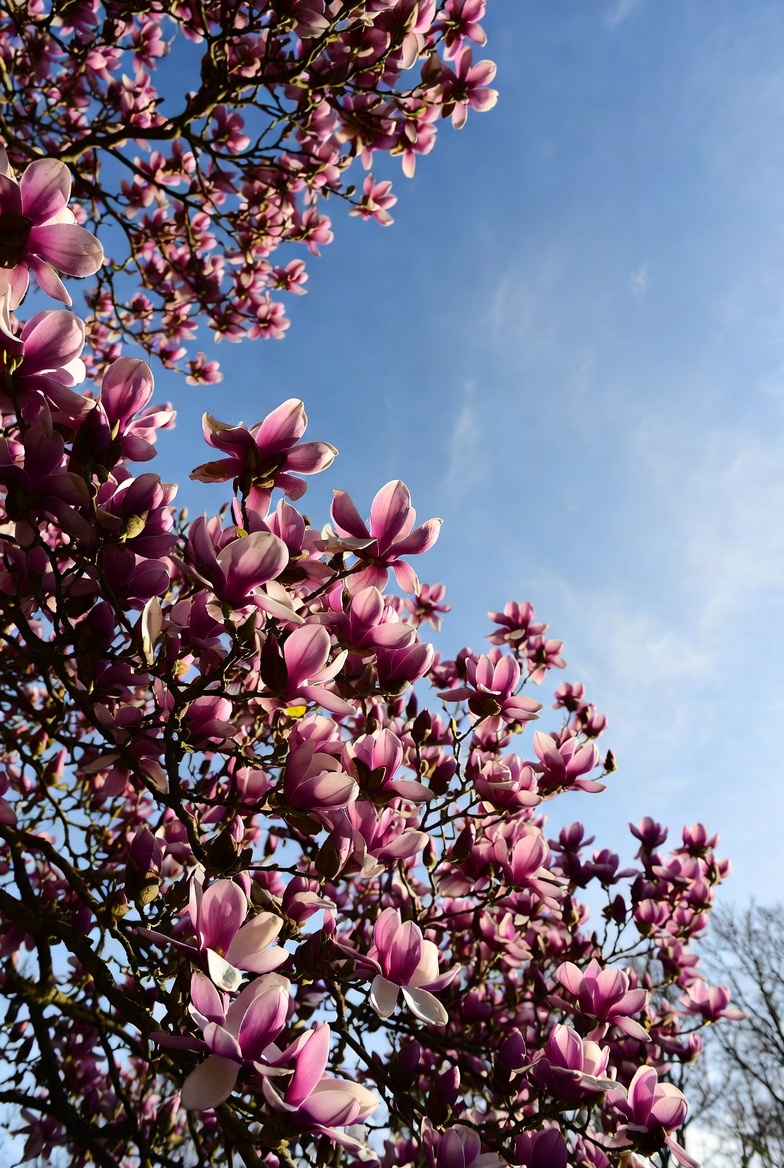
The Saucer Magnolia is a classic beauty, known for its large, goblet-shaped flowers that appear in early spring. The blooms are typically pinkish-purple on the outside and white on the inside, creating a lovely two-tone effect.
- Description: A deciduous tree that can grow with a single trunk or as a large, spreading shrub. The flowers can reach up to 10 inches in diameter.
- Benefits: Provides a spectacular, early-season floral show. Its smooth, gray bark adds winter interest.
- Growing Conditions: Best in full sun to light shade with rich, moist, and slightly acidic soil. Hardy in zones 4-9.
4. Pink Dogwood (Cornus florida ‘Rubra’)

The Pink Dogwood is a beloved landscape tree, prized for its graceful form and stunning floral display. What appear to be large pink petals are actually bracts—modified leaves that surround the small, true flowers.
- Description: A small to medium-sized tree with a spreading habit. The pink bracts appear in spring, followed by red berries in the fall that attract birds.
- Benefits: Offers four-season interest with spring flowers, summer foliage, fall color, and winter structure.
- Growing Conditions: Does well in partial shade, especially in hotter climates, and prefers acidic, well-drained soil. Hardy in zones 5-9.
5. Prairifire Crabapple (Malus ‘Prairifire’)

If you’re looking for a tree that delivers an explosion of color, the Prairifire Crabapple is an outstanding choice. Its deep reddish-pink flowers are a showstopper in the spring landscape.
- Description: A small ornamental tree with an upright, rounded shape. The flowers are followed by small, persistent, dark red fruits.
- Benefits: Excellent disease resistance compared to other crabapples. The fruit provides food for birds in winter.
- Growing Conditions: Requires full sun for the best flowering and fruit production. Adaptable to most soil types. Hardy in zones 4-8.
6. Weeping Higan Cherry (Prunus subhirtella ‘Pendula’)

For a touch of romance and grace, the Weeping Higan Cherry is unmatched. Its long, cascading branches are draped in delicate light pink to white flowers in early spring.
- Description: A small, weeping tree that creates a beautiful, fountain-like silhouette. It is one of the first cherry trees to bloom.
- Benefits: Its elegant weeping form makes it a stunning focal point in any garden, even when not in bloom.
- Growing Conditions: Prefers full sun and moist, fertile, well-drained soil. Hardy in zones 5-8.
7. ‘Pink Velour’ Crape Myrtle (Lagerstroemia indica ‘Pink Velour’)

A true summer-flowering star, the ‘Pink Velour’ Crape Myrtle boasts large clusters of vibrant, hot pink flowers from mid-summer to fall.
- Description: This tree with pink flowers has a multi-stemmed form, attractive peeling bark, and dark green leaves that have a reddish tint when new.
- Benefits: Provides long-lasting summer color when many other plants have finished blooming. It is also drought-tolerant once established.
- Growing Conditions: Loves full sun and heat. Tolerates a range of soils but prefers well-drained conditions. Hardy in zones 6-9.
8. Jane Magnolia (Magnolia ‘Jane’)

Part of the “Little Girl” series of hybrid magnolias, ‘Jane’ is a compact tree perfect for smaller spaces. It produces beautiful reddish-purple buds that open to cup-shaped pink flowers.
- Description: A slow-growing, shrubby tree that blooms later than many other magnolias, reducing the risk of frost damage to its flowers.
- Benefits: Its smaller size makes it ideal for urban gardens, and its late bloom time is a major advantage in regions with late frosts.
- Growing Conditions: Thrives in full sun to part shade with moist, acidic, well-drained soil. Hardy in zones 4-8.
9. Akebono Yoshino Cherry (Prunus x yedoensis ‘Akebono’)

The Akebono Cherry is a variety of the famous Yoshino Cherry. It produces an abundance of almond-scented, semi-double flowers that open pink and fade to white.
- Description: A medium-sized tree with a broad, rounded canopy. Its profuse blossoms create a soft, cloud-like effect.
- Benefits: Known for its vigorous growth and stunning floral display. It’s a slightly pinker alternative to the classic white Yoshino.
- Growing Conditions: Needs full sun and well-drained soil. Hardy in USDA zones 5-8.
10. Rose of Sharon (Hibiscus syriacus)

While often grown as a shrub, the Rose of Sharon can be trained into a small tree form. It produces large, trumpet-shaped flowers in shades of pink, lavender, and white throughout the summer.
- Description: An upright, deciduous shrub or small tree. Varieties like ‘Aphrodite’ or ‘Pink Giant’ offer beautiful pink blooms.
- Benefits: A reliable late-summer bloomer that is tolerant of heat, drought, and poor soil.
- Growing Conditions: Full sun is best for maximum flowering. It’s a very adaptable and low-maintenance plant. Hardy in zones 5-9.
11. Pink Trumpet Tree (Handroanthus impetiginosus)

A tropical beauty, the Pink Trumpet Tree puts on a spectacular show in late winter or early spring, covering itself in clusters of large, trumpet-shaped pink flowers.
- Description: A medium to large deciduous tree with a rounded crown. It blooms on bare branches, making the display even more dramatic.
- Benefits: Creates a massive, unmissable burst of color. It’s a fast-growing and relatively drought-tolerant tree.
- Growing Conditions: Requires a warm climate, full sun, and well-drained soil. Hardy in zones 9-11.
12. Persian Silk Tree (Albizia julibrissin)

Also known as the Mimosa tree, this plant is famed for its unique, feathery pink flowers that look like silky threads. Its fern-like foliage adds a tropical feel to the landscape.
- Description: A fast-growing, small to medium-sized tree with a wide, umbrella-like canopy.
- Benefits: The fragrant, exotic-looking flowers bloom all summer long. The foliage is equally attractive, folding up at night.
- Growing Conditions: Thrives in full sun and is adaptable to various soil types. Hardy in zones 6-9. Note: It can be invasive in some regions.
13. Royal Star Magnolia (Magnolia stellata ‘Royal Star’)

While Star Magnolias are typically white, ‘Royal Star’ buds are a delicate pale pink before opening into larger, white, star-shaped flowers. The hint of pink adds a lovely blush to the early spring garden.
- Description: A compact, multi-stemmed shrub or small tree that is one of the earliest magnolias to bloom.
- Benefits: Its small stature is perfect for foundation plantings or small gardens. It is also more cold-hardy than many other magnolias.
- Growing Conditions: Prefers full sun to part shade and rich, moist soil. Hardy in zones 4-9.
14. American Plum (Prunus americana)

This hardy native tree is a workhorse, offering fragrant, five-petaled white to pale pink flowers in early spring. These are followed by edible red plums in the summer.
- Description: A small, often thicket-forming tree or large shrub with thorny branches.
- Benefits: Provides both ornamental beauty and edible fruit. It’s a great choice for wildlife gardens, attracting pollinators and birds.
- Growing Conditions: Very adaptable, tolerating a wide range of soils and conditions. Needs full sun for best fruit production. Hardy in zones 3-8.
15. Thundercloud Plum (Prunus cerasifera ‘Thundercloud’)

This ornamental plum is valued as much for its foliage as its flowers. It produces clouds of single, light pink flowers in early spring, which stand out beautifully against its deep purple leaves.
- Description: A medium-sized tree with a rounded form. The purple foliage holds its color throughout the growing season.
- Benefits: Provides season-long color with its distinctive foliage, in addition to the lovely spring flower display.
- Growing Conditions: Prefers full sun to maintain its deep leaf color. Grows well in average, well-drained soil. Hardy in zones 5-8.
FAQs About Pink Flowering Trees
Q: What is the best time to plant a tree with pink flowers?
A: The best time to plant most deciduous trees is in the fall, after the leaves have dropped, or in early spring before new growth begins. This allows the root system to establish itself before the stress of summer heat.
Q: How do I care for my new pink flowering tree?
A: Proper watering is crucial during the first year. Water deeply once a week, or more often in extreme heat. Mulch around the base of the tree (without touching the trunk) to retain moisture and suppress weeds. Pruning needs vary by species, but it’s generally done after flowering or in the dormant season.
Q: Are there any pink flowering trees suitable for very small gardens?
A: Yes! The ‘Jane’ Magnolia, Rose of Sharon (trained as a tree), and Weeping Higan Cherry are all excellent choices for smaller spaces due to their compact size.
Final Words
A tree with pink flowers offers more than just color; it brings life, structure, and seasonal delight to your landscape. From the bold statement of a Kwanzan Cherry to the delicate grace of a Weeping Higan, there is a perfect pink-blossomed tree waiting to enhance your garden. By considering your climate, soil, and space, you can select a tree that will not only survive but thrive, rewarding you with spectacular beauty for many years. We hope this list inspires you to find the perfect tree to brighten your own corner of the world.
