

15 Radish Growing Tips for Quick Harvests
Radishes are one of the most rewarding vegetables for home gardeners, offering a crisp, peppery flavor and the satisfaction of a harvest in as little as 25-30 days. These root vegetables, part of the Brassicaceae family, thrive in cool weather and can be grown in small spaces, making them ideal for beginners or those with limited garden areas. Whether you’re planting spring radishes like Cherry Belle or fall varieties such as Daikon, the key to success lies in providing the right conditions for rapid growth without stress. Radishes not only add zest to salads and dishes but also serve as excellent companion plants, deterring pests from other crops.
Growing radishes quickly requires attention to soil, watering, and timing. They germinate in just 3-5 days and mature swiftly, but factors like drought or overcrowding can lead to woody, pithy roots. By following proven techniques, you can enjoy multiple harvests throughout the season through succession planting.
Tip 1: Select Fast-Maturing Radish Varieties
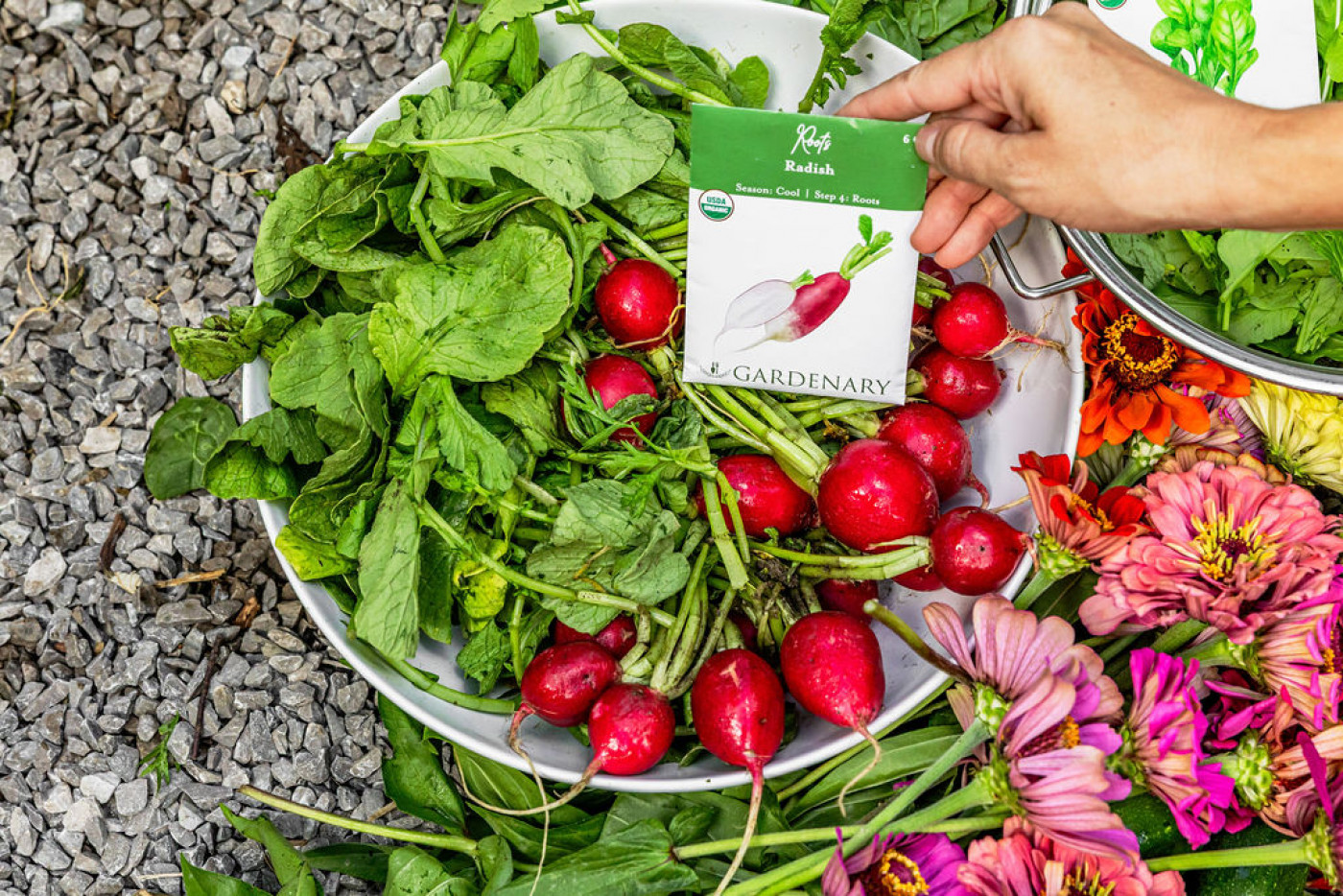
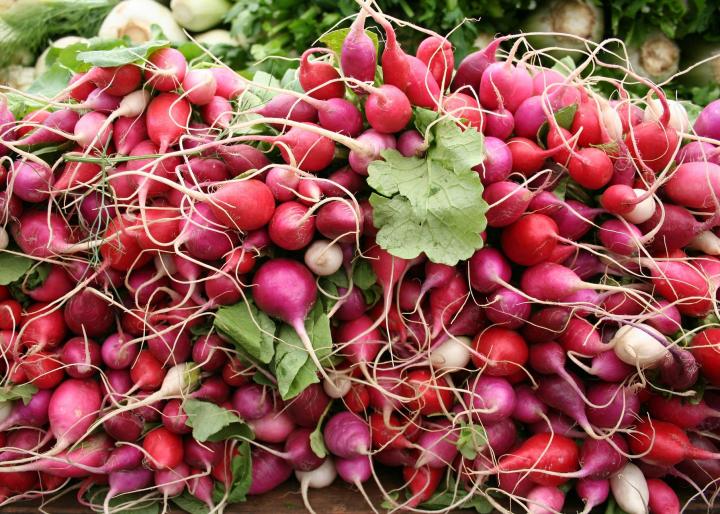
Choosing the right radish varieties is crucial for quick harvests. Opt for spring radishes like French Breakfast or Cherry Belle, which mature in 20-30 days, rather than slower winter types. These varieties are bred for speed and mild flavor, performing best in cool temperatures below 70°F. Check seed packets for “days to maturity” to align with your growing season. Mixing varieties, such as red globe and white icicle, adds diversity to your garden while ensuring continuous production. Remember, hybrid radishes often resist bolting better, extending your harvest window. By selecting appropriately, you’ll avoid delays and enjoy fresh radishes sooner.
Tip 2: Plant in Cool Weather Seasons
Radishes prefer cool weather, so time your planting for early spring or fall when soil temperatures are 40-70°F. Avoid summer heat, which causes bolting and bitter roots. In most regions, sow seeds as soon as the soil can be worked in April or August for fall crops. This timing leverages natural conditions for rapid growth, with radishes sprouting in 3-5 days. For warmer climates, use shade cloth to mimic cooler environments. Proper seasonal planting ensures tender, juicy radishes without the pithiness from stress.
Tip 3: Prepare Loose, Nutrient-Rich Soil
Soil preparation is key for radishes to develop full roots quickly. Loosen the soil to at least 6-12 inches deep to prevent forking, incorporating 1-3 inches of compost for fertility. Aim for a pH of 6.0-7.0 and well-draining texture to avoid waterlogging. Avoid fresh manure, which can cause misshapen roots. This setup promotes even growth, allowing radishes to expand without resistance for harvests in under a month.

Tip 4: Direct Sow Seeds Properly
Direct sowing is the best method for radishes, as they don’t transplant well. Plant seeds ½ inch deep in rows 12 inches apart, spacing them 1 inch initially. Cover lightly and water deeply to 6 inches. This encourages strong root development from the start. In containers, use pots at least 6 inches deep for similar results. Proper sowing leads to uniform germination and quicker maturity.

Tip 5: Thin Seedlings for Optimal Spacing
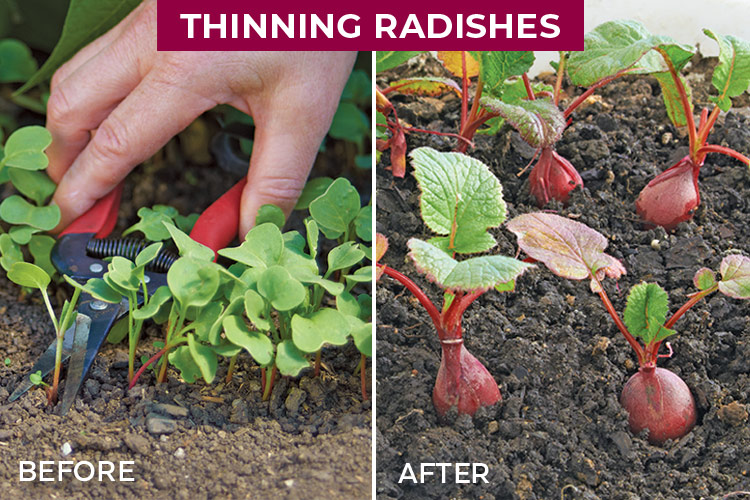
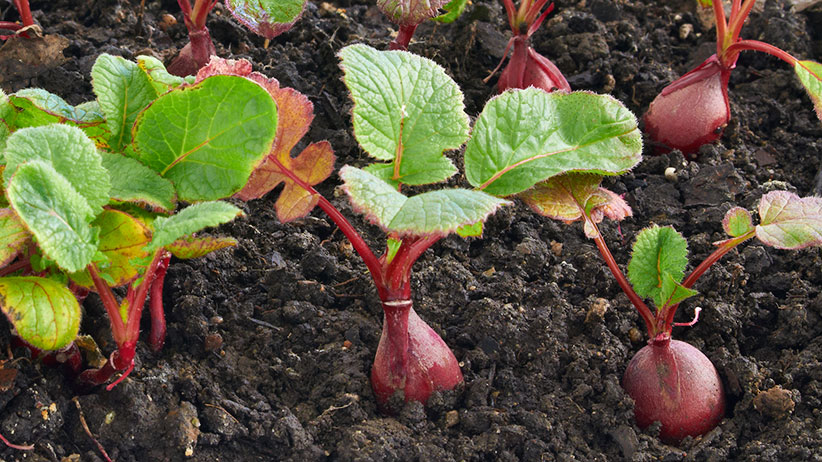
Once radishes sprout, thin them to 2-3 inches apart when leaves are 2 inches tall. Overcrowding stunts growth and leads to small roots. Use scissors to snip extras, avoiding root disturbance. This allows each plant ample space for bulb formation, resulting in larger, quicker harvests. Thinned greens can be eaten as microgreens for zero waste.
Tip 6: Provide Consistent Watering
Radishes need steady moisture to grow quickly without cracking or becoming woody. Water 1 inch per week, keeping soil evenly moist but not soggy. Mulch with straw to retain humidity. Inconsistent watering causes split roots, so check soil daily in warm weather. This practice ensures plump, tender radishes ready in weeks.
Tip 7: Ensure Full Sun Exposure
Position radishes in spots with at least 6 hours of direct sunlight daily for vigorous growth. Partial shade works in hot climates but may slow maturity. Sunlight fuels photosynthesis, leading to faster root development. Rotate planting areas to prevent soil depletion. Adequate light results in healthier plants and quicker harvests.
Tip 8: Use Succession Planting
For continuous supply, sow radish seeds every 10-14 days. This staggers harvests, providing fresh radishes over months. Start in early spring and continue until heat arrives, resuming in fall. Succession planting maximizes space and yields without overwhelming you at once.

Tip 9: Apply Light Fertilization
Radishes don’t need heavy feeding; excess nitrogen promotes leaves over roots. Use balanced fertilizer or compost tea sparingly at planting. Organic matter in soil suffices for quick growers. Over-fertilizing can cause cracking, so monitor plant health and adjust.

Tip 10: Mulch to Conserve Moisture
Apply 2-3 inches of organic mulch around radishes to suppress weeds and retain soil moisture. This reduces watering needs and maintains even temperatures, preventing bolting. Mulch also adds nutrients as it decomposes, supporting rapid growth.

Tip 11: Monitor and Control Pests
Common pests like flea beetles can riddle radish leaves. Use row covers or diatomaceous earth for protection. Inspect regularly and remove eggs. Healthy, quick-growing radishes are more resilient, but early intervention prevents setbacks.
Tip 12: Practice Weed Management
Keep weeds at bay to avoid competition for nutrients and water. Hand-pull or hoe shallowly around radishes. Mulching helps here too. Weed-free beds allow radishes to focus energy on root development for faster harvests.
Tip 13: Harvest at the Right Time
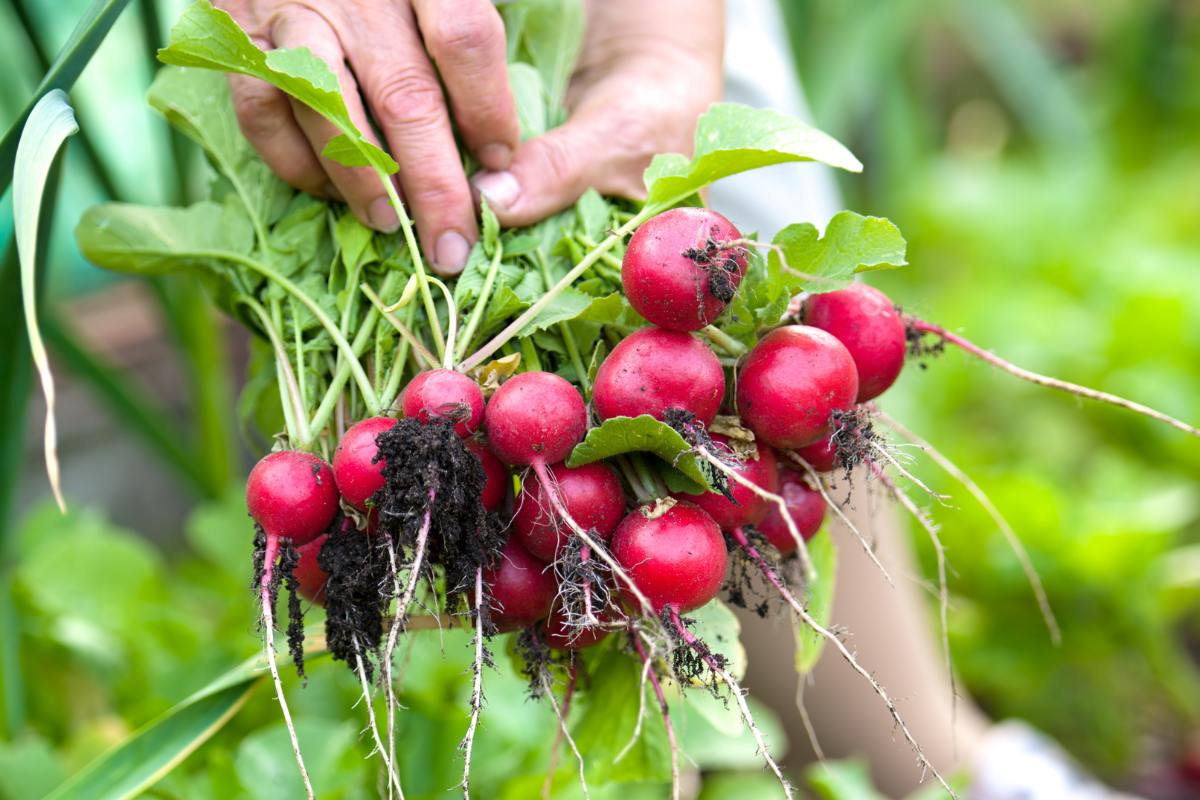
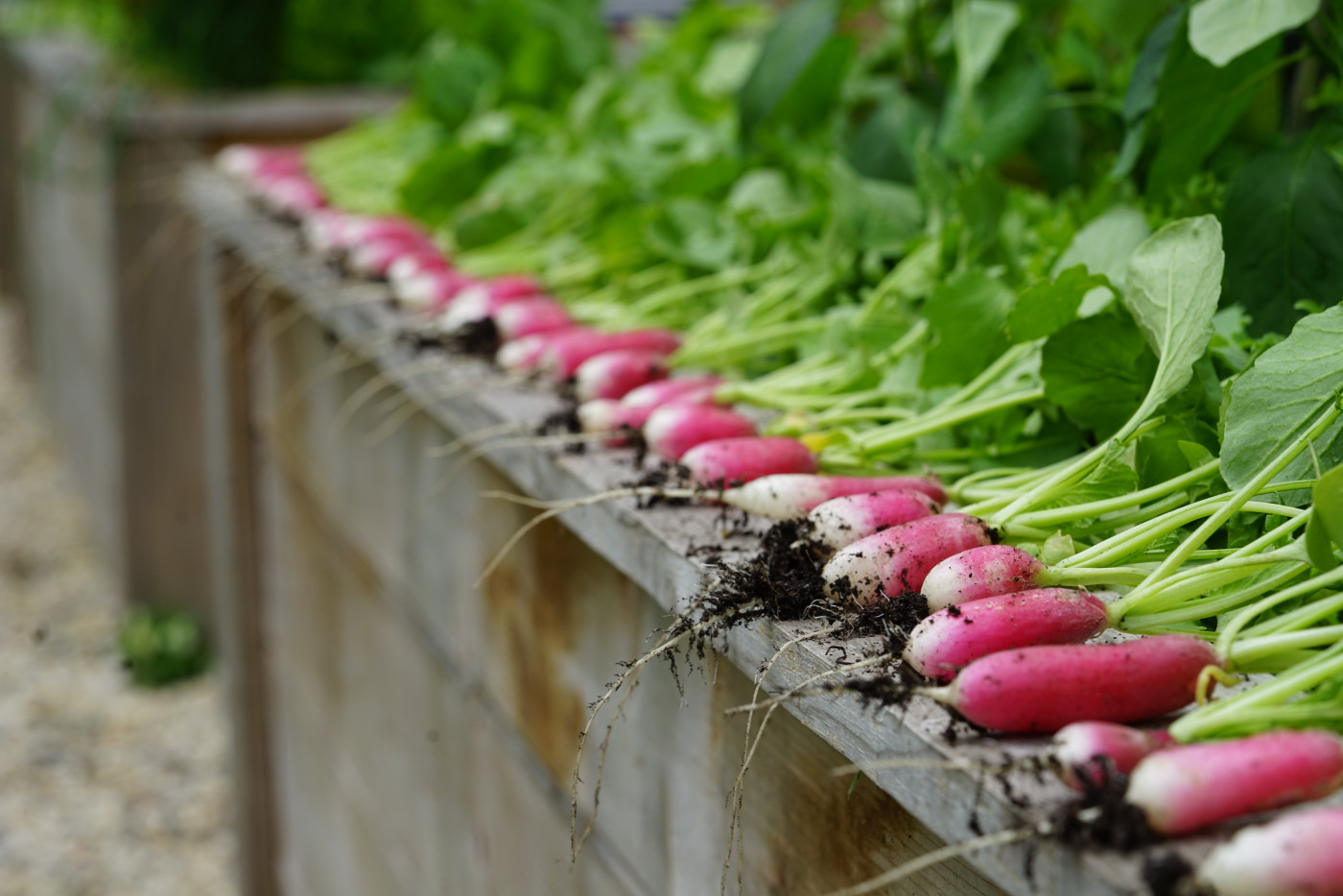
Harvest radishes when shoulders emerge from soil, typically 3-5 weeks after planting. Pull gently to avoid damage. Over-mature radishes turn pithy, so check daily. This timing yields the crispest results.
Tip 14: Use Companion Planting
Plant radishes with lettuce, carrots, or beans to deter pests and maximize space. They act as trap crops for aphids. This method enhances overall garden health and supports quick radish growth.
Tip 15: Avoid Common Mistakes
Prevent issues like bolting by shading in heat or ensuring consistent moisture. Don’t plant too deep or in compacted soil. Learning from errors ensures future quick harvests of perfect radishes.
FAQs
How long do radishes take to grow?
Radishes typically mature in 25-30 days, depending on variety and conditions.
Can I grow radishes in pots?
Yes, use containers at least 6 inches deep with well-draining soil for successful growth.
Why are my radishes bolting?
Heat stress or inconsistent watering often causes bolting; plant in cool seasons and mulch.
Are radish greens edible?
Absolutely, they’re nutritious and can be used in salads or sautés.
How do I store harvested radishes?
Remove greens and store in the fridge for up to two weeks in a perforated bag.
What pests affect radishes?
Flea beetles and root maggots; use covers and rotate crops to manage.
Can radishes be grown year-round?
In mild climates, yes, with succession planting; in others, focus on spring and fall.
Final Words
Growing radishes offers a quick path to gardening success, with these 15 tips ensuring bountiful, speedy harvests. By focusing on cool weather, proper soil, and consistent care, you’ll enjoy fresh radishes regularly. Experiment with varieties and techniques to refine your approach.


